
School Partner Interview| How Design Thinking is Transforming New Asia Middle School’s Teaching and Learning
As technology education continues to evolve, more educators are asking a deeper question: How can we help students not only learn tools but also understand how technology shapes the world and their lives?
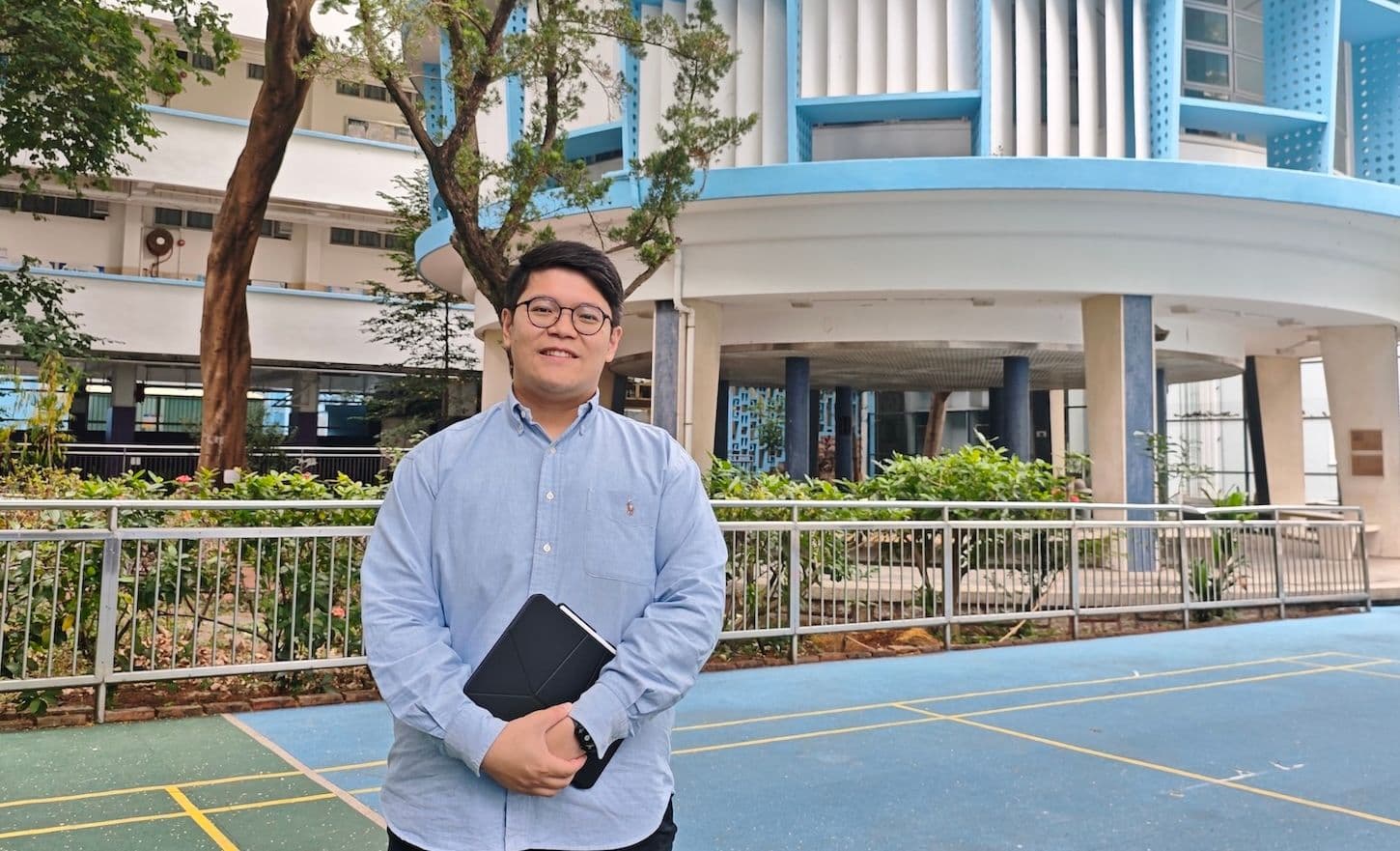
That’s exactly the mission driving Mr. Fung Tsz Kit (Mr. Fung), English Department Head and STEAM Education Coordinator at New Asia Middle School. Under his leadership, this traditionally humanities-driven school has been quietly undergoing a transformation.
And at the heart of this transformation lies a subject most students had never encountered before: UX/UI design (User Experience and Interface Design).
From English Teacher to Innovation Advocate: STEAM Isn’t Just for "STEM Kids"
Mr. Fung first appears as a calm, refined language teacher. But bring up STEAM education and his conviction shines through:
“STEAM education shouldn’t be reserved for one type of student. It should be for everyone.”
This belief stems from personal experience. Coming from a non-STEAM background, Mr. Fung clearly understands how a lack of confidence in tech can limit students.
Wishing to dismantle both subject boundaries and self-imposed limitations, he introduced SEED Foundation’s UX/UI curriculum to his school.
His goal? To help students see technology from a human-centered perspective and discover new paths they never imagined.
UX/UI: A Skillset and a Window Into the Future
The UX/UI course is not simply about technical design skills. It’s about cultivating a mindset: one that begins with the end user in mind. Students learn to observe real-world problems, identify pain points and design meaningful solutions. It’s a journey that challenges them and transforms them.
“Students absorb all kinds of knowledge but without real-world application, much of it is forgotten. Students only begin to recognize real problems and understand how technology can solve them when they step outside the classroom and into real-world contexts.”
Mr. Fung emphasizes that design thinking is one of the most crucial abilities students need for the future. Because work is no longer purely technical, it must be integrative and human-centered.
Breaking Self-Limiting Beliefs: “I Didn’t Know I Could Do This”
One student’s journey stood out to Mr. Fung. The student had modest visual arts grades and little confidence in design. But through SEED instructors’ gradual, scaffolded guidance, starting from color theory and layout to end-user empathy. He steadily built his competency.
By the end of the program, the student proudly showed his final project and said:
“I didn’t know I could actually do this.”
This seemingly simple statement reflected a powerful shift in identity. The student no longer saw design as something “only for design talented people” but as a way of thinking that something is learnable.
That’s the true magic of education: enabling students to discover hidden potential and build confidence through hand-on learning.
In the Age of AI, the True Value of Tech Education Is “Choice”
Mr. Fung is acutely aware that today’s students are growing up in a world reshaped by AI. The old model of “Science students become engineers, Arts students become designer” no longer works.
“If students think the only path is becoming a programmer but AI takes over that role. They might find themselves directionless when the industry shifts”
This is why he believes students need trans-disciplinary thinking and creative flexibility. SEED’s UX/UI program shows them that tech isn’t just about coding or how to use the tools. It includes communication, aesthetics, user insight, and human-centered innovation.
“SEED doesn’t just offer knowledge and tools. It helps students develop the capacity to meet future challenges head-on.”
Design Thinking as Empathy: A Personal and Pedagogical Shift
At the core of UX/UI design is empathy, the ability to step into other people’s shoes. Students learn that tech isn’t just about systems and code but about real human needs.
In this way, UX/UI becomes more than just a tech class. it becomes a powerful exercise in empathy and learning to see the world through someone else’s eyes.
And the transformation hasn’t been limited to students alone. Through SEED’s partnership, Mr. Fung observed a broader “cultural shift” happening within the school. New Asia Middle School has been integrating more service learning and project-based learning into the curriculum. The classroom is no longer a one-way street of knowledge transmission. Now, students are practicing collaborative problem-solving, reflective thinking, and real-world application—the exact principles that STEAM education is meant to embody.
Conclusion
As the interview drew to a close, Mr. Fung shared his educational philosophy in one powerful sentence:
“Education isn’t about defining students, it’s about opening up possibilities.”
This line encapsulates everything the SEED UX/UI program hopes to achieve.
Through new perspectives, students begin to see that the future isn’t fixed and it’s full of options. Through empathy and design, they learn to understand people, meet real needs and solve real problems. And with those skills, they’ll not only survive but thrive in an evolving world shaped by AI and innovation.
As Mr. Fung concluded:
“We’re no longer just delivering knowledge—we’re guiding students to understand the world, and equipping them to shape the future.”
At SEED Foundation, we are honored to walk this journey with educators like Mr. Fung and schools like New Asia Middle School. In a world full of uncertainties, we believe that the purpose of education isn’t to hand students the answers but to inspire them to ask better questions and keep exploring, until they find the path that’s truly their own.